Congo Travel Checklist: Things to Prepare Before Your Trip
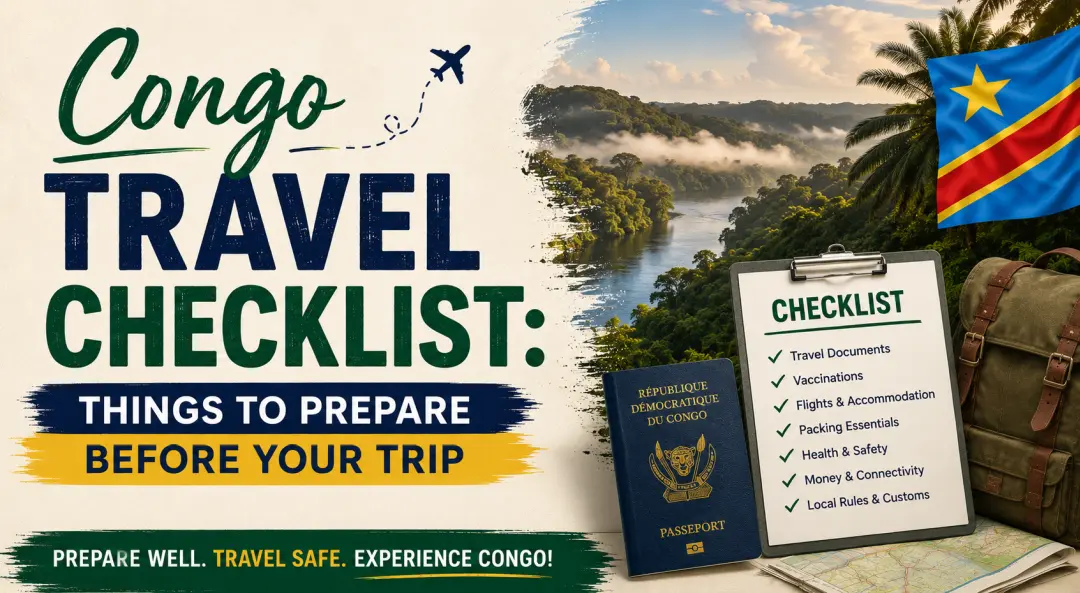
So you’re heading to Congo? Awesome. But honestly, don’t wing this like you can with a trip to Europe. Whether it’s Kinshasa’s chaotic energy, the rainforest, or visiting relatives, you actually need to plan. I’m not trying to scare you—just being real. Here’s what actually matters before you leave.
1. Get Your Visa Sorted NOW (Like, Seriously)
Yeah, the visa thing. It’s annoying but non-negotiable. Congo requires one, and here’s where people mess up: they assume it’s straightforward. It’s not. The Congo Visa requirements are weird, they change without warning, and the embassy website probably won’t have all the info you need.
Okay, real talk. Just hire a visa consultant for this. I know, I know—it sounds like extra money you don’t wanna spend. But genuinely? Do it anyway and they will take care of everything.
The consulate gets backed up too. If you’re applying on your own and something’s missing? You’re starting over. With a consultant? They’ve already dealt with this and know how to avoid it.
2. Get Your Shots Done (And Health Insurance)
Yellow fever shot is mandatory—they won’t let you in without proof. Seriously. But also grab malaria pills. Go to a travel clinic like 4-6 weeks ahead because they’ll also tell you if you need other stuff (typhoid, hepatitis, tetanus, whatever). Don’t just order pills online and hope—talk to someone who knows.
And get travel insurance. The kind that covers evacuation. Congo’s hospitals in remote areas aren’t like what you’re used to. If something goes wrong in the middle of nowhere, that insurance could be life-saving. Not being dramatic—just realistic.
3. Your Passport Better Have 6 Months Left
Check the expiration date now. Congo wants at least 6 months after your trip ends. And you need blank pages—a couple of them. If your passport’s running out, get a new one NOW. Renewals take forever, especially if you’re not in the US or Europe.
4. Book Your Stuff Before You Land
Don’t show up expecting to find a hotel and figure it out. Internet’s unreliable once you’re there, hotels get full (especially in Kinshasa), and last-minute bookings are a nightmare. Book flights, hotels, guides—everything—from home. If you’re going to remote places, find a legit tour operator now who can handle the messy parts you can’t coordinate from abroad.
5. Cash, Cards, and Don’t Get Stuck
Call your bank before you go so they don’t block your card. But real talk? Cards don’t work everywhere outside Kinshasa. You need cash. US dollars are king—bring new bills with no marks or damage. They get better exchange rates.
Hit up an ATM in Kinshasa if you can, but don’t rely on it. Bring more cash than feels comfortable and stash it in different spots. Get some Congolese Francs too before you arrive or grab them at the airport. ATMs are finicky and sometimes just… don’t work.
6. Check If Your Insurance Actually Covers What You’re Doing
That cheap travel insurance from your credit card? Probably doesn’t cover hiking or going to national parks. If you’re actually doing stuff (and you should), make sure your policy covers it. Read the actual terms, not just the summary. Sounds boring but matters.
7. Actually Check What’s Happening There Right Now
Look at your government’s travel advisory before booking. Things change. Some regions are totally fine for tourists, others… aren’t. Don’t be paranoid but don’t be dumb either. Use legitimate guides, don’t wander around Kinshasa solo at 2am, and just… pay attention.
8. Get a Local Phone Number
Vodafone and Airtel both operate there. Pick up a local SIM when you land—super cheap and actually useful. WhatsApp works on WiFi which is everywhere. Bring a backup data plan or a portable hotspot thing just in case, especially if you’re bouncing around remote spots.
5 Frequently Asked Questions
Q: How long’s this visa thing actually take?
A: Usually 2-4 weeks depending on which embassy and where you’re from. But honestly, it can drag. A consultant helps because they know which embassies are slow and how to push things along without annoying people.
Q: Is Congo actually safe though?
A: Yeah, most areas are fine. Don’t go to the eastern provinces where there’s active conflict, obviously. But Kinshasa, tourist spots, national parks? Totally normal. Millions of people live here safely. Just use common sense—go with guides you trust, don’t make dumb decisions, stay aware. It’s not Switzerland, but it’s not a warzone for tourists either.
Q: When should I actually go?
A: Dry season (May to September) is best if you want to trek rainforests or hit national parks without drowning. June to August is when tourists show up so less crowded if that matters. Skip rainy season if you’re hiking—everything gets muddy and mosquitoes are worse.
Q: Will my credit card work?
A: Nope, not really. Maybe in fancy Kinshasa hotels but don’t count on it. Bring cash. USD is preferred. Some people accept cards but you’ll stress yourself out trying to find them. Just carry dollars.
Q: Do I actually need malaria pills?
A: Yes. Talk to a doctor, not me. They’ll probably recommend them, especially if you’re going during rainy season when mosquitoes are everywhere. Don’t skip this.